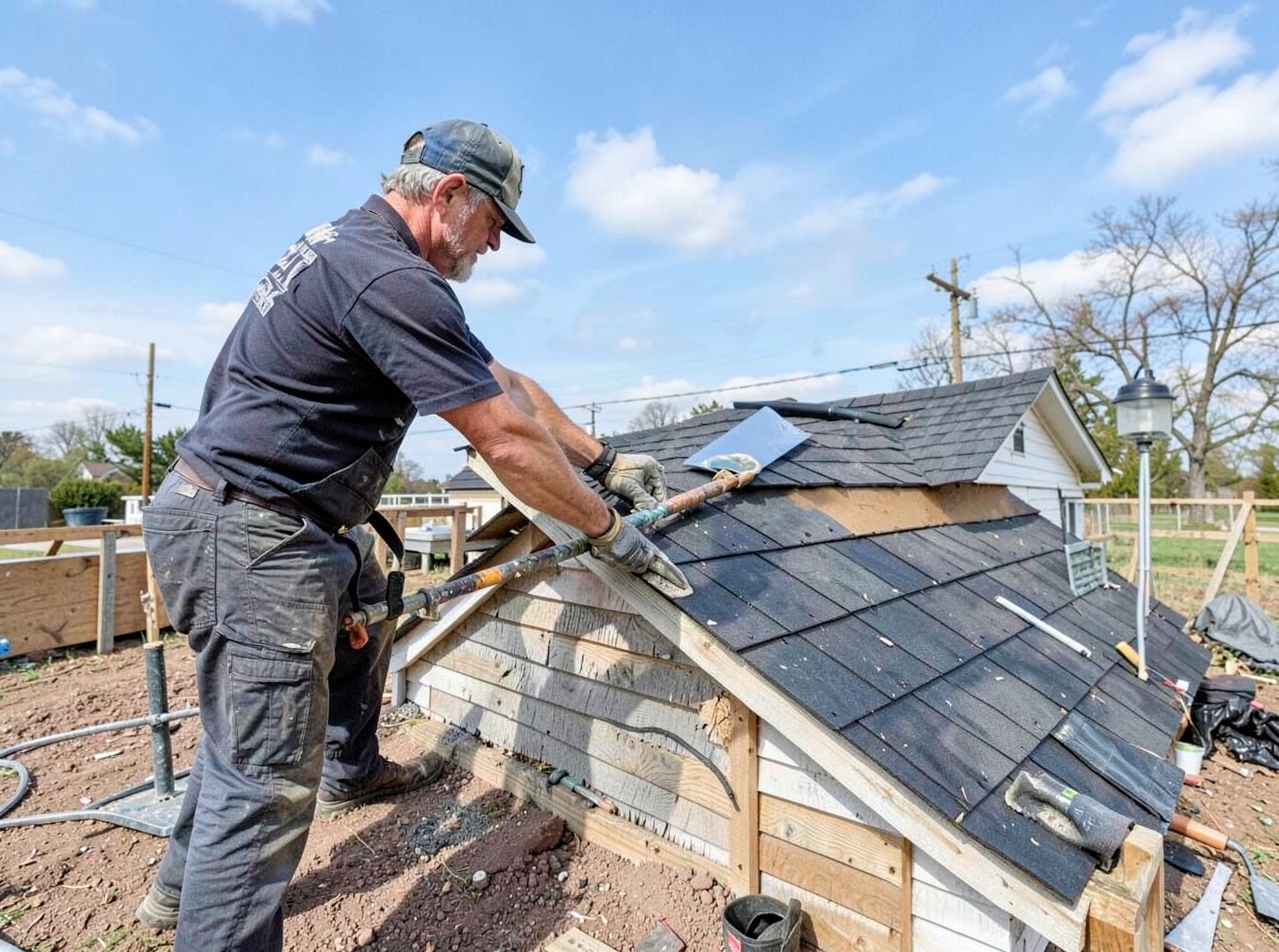
Grand Island roofs face repeated stress from hot summers that soften shingles and cold winters that cause contraction cracks, plus frequent thunderstorms and occasional tornadoes that tear off sections in minutes. Homes in Downtown and Northwest Grand Island often date to the mid-20th century with original decking that has absorbed decades of moisture from the Platte River valley humidity. A proper replacement starts with full tear-off to inspect for rot, followed by new underlayment rated for high wind and ice dam protection along eaves.
Choosing materials means balancing cost against local performance. Architectural asphalt shingles hold up better than three-tab in Hall County wind events, while standing-seam metal performs well on steeper pitches near the Grand Island Regional Airport where hail is common. Flat sections on commercial or ranch-style homes require modified bitumen or TPO systems that resist ponding during heavy spring rains. Crews must also account for the clay-heavy soils that shift foundations slightly over time, which can telegraph into roof planes if decking is not properly fastened.
Code compliance in Grand Island requires meeting Hall County wind-load standards and proper flashing at valleys and chimneys. Skipping step flashing or using the wrong nail pattern leads to leaks within two seasons. Local crews carry extra ridge vent material because many 1960s-1980s homes in the area were built with inadequate attic ventilation that accelerates shingle failure in summer heat.
Edge cases include matching existing slate-look shingles on Stuhr Museum-area properties or coordinating with airport noise abatement rules that limit work hours. Always verify soffit and fascia condition during tear-off because water intrusion often hides there after years of wind-driven rain.
Technician insight
In Grand Island, the thing that catches most people out with roof replacement is underestimating how quickly cold winters and summer heat cycles degrade decking on 1960s-1980s homes in Downtown. Many owners skip the full tear-off and end up with hidden rot that shows up as ice dams the first winter after the job.
Northwest Grand Island Wind Damage
A 1978 ranch home lost shingles along the north slope after a spring thunderstorm. Full tear-off revealed rotted deck boards from years of poor ventilation. New architectural shingles with upgraded ridge vent and ice shield were installed, restoring weather protection before the next cold season.
Roof Replacement Services We Offer
✓Asphalt Shingle Roof Replacement
Full tear-off and installation of architectural shingles rated for 130 mph winds, common on Hall County residential properties.
✓Metal Roof Replacement
Standing-seam or screw-down metal systems installed over older homes in Northwest Grand Island to handle hail and thermal movement.
✓Storm Damage Roof Replacement
Insurance-supported replacement after thunderstorms or tornadoes that remove sections near the Grand Island Regional Airport corridor.
✓Flat Roof Replacement
Modified bitumen or TPO membrane replacement on commercial and ranch homes where ponding occurs during heavy rains.
✓Tile Roof Replacement
Concrete or clay tile re-roofing for select properties that need heavier material to match original construction in older neighborhoods.
Roof Replacement Cost in Grand Island, NE
| Service | Typical Range | What Affects It |
|---|---|---|
| Asphalt Shingle Replacement | $6,500–$14,000 | Varies with house size, number of layers removed, and whether deck repairs are required. |
| Metal Roof Replacement | $11,000–$22,000 | Higher for standing-seam systems and steeper pitches common near the airport. |
| Storm Damage Replacement | $8,000–$18,000 | Depends on extent of damage and insurance scope after Hall County weather events. |
| Flat Roof Replacement | $5,000–$12,000 | Affects commercial buildings and some ranch homes in Northwest Grand Island. |
Ranges are typical for Grand Island, NE and confirmed with an exact written quote before any work starts.
How it works
- 1
On-Site Assessment
Inspect decking, flashing, and ventilation on the existing roof while noting wind exposure and attic conditions typical in Grand Island homes.
- 2
Material Selection and Permit
Select shingles or membrane rated for local wind and temperature cycles, then pull Hall County permits before scheduling.
- 3
Tear-Off and Deck Repair
Remove all layers to the deck, replace rotten boards, and add ice-and-water shield along eaves and valleys.
- 4
Installation and Ventilation Upgrade
Install new underlayment, shingles or metal, ridge vent, and step flashing, then verify attic airflow meets current standards.
- 5
Final Walk and Cleanup
Magnet sweep for nails, check all penetrations, and review drainage with the homeowner.
Pricing
Most roof replacements in Grand Island fall into broad ranges driven by square footage, pitch, and material choice rather than fixed quotes.